
The Power of Indigenous Wisdom: What Modern Society Can Learn From Ancient Knowledge
There are moments in travel when you think you're documenting one thing—but end up witnessing something far deeper.
My arrival in Kauai was supposed to be a photography assignment. A gathering of indigenous leaders from around the world. A cultural summit. A story to capture and move on from.
Instead, it became one of the most profound encounters I've had with indigenous wisdom and its relevance to the modern world.
Indigenous Wisdom in a Modern Setting
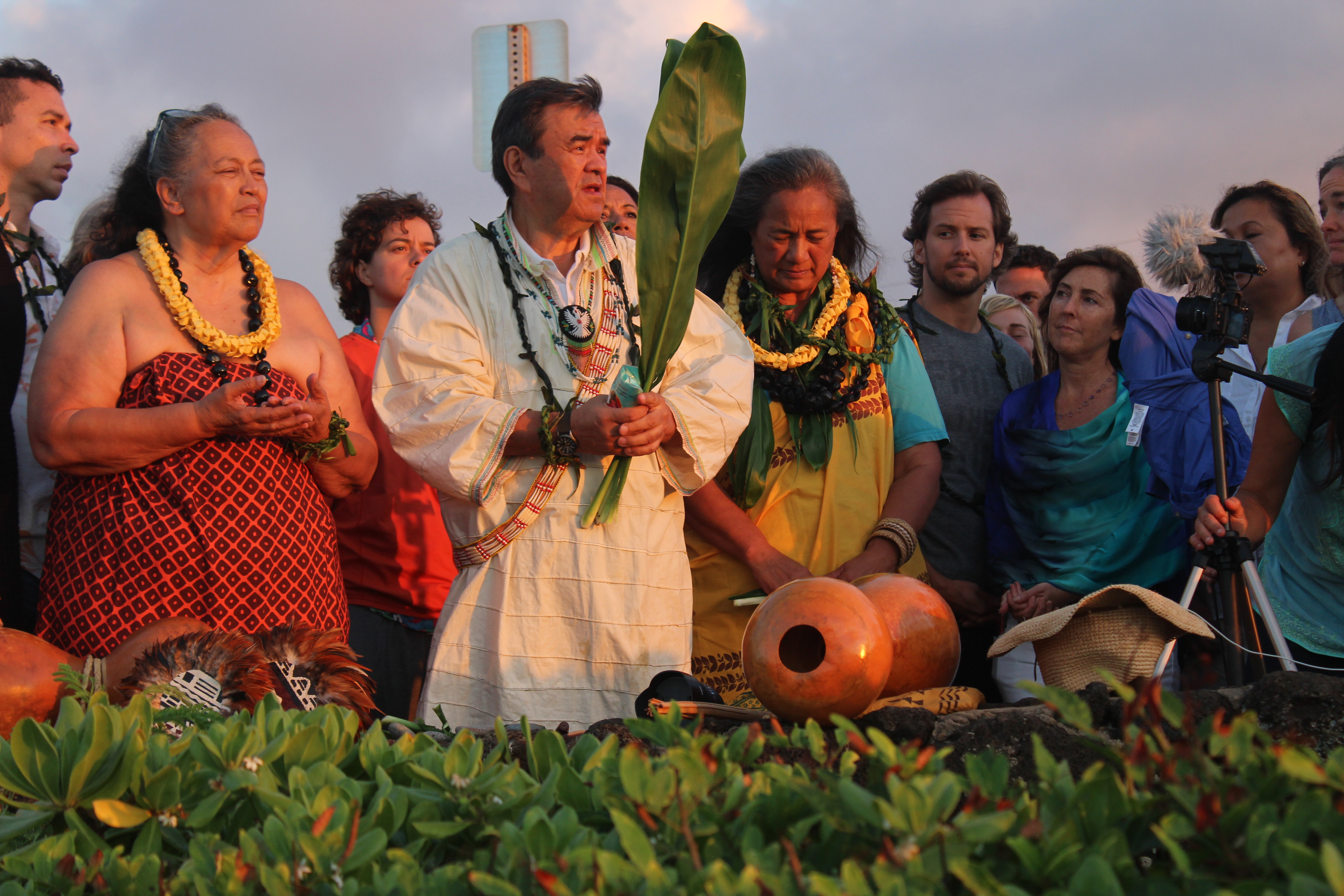
The gathering, known as Wisdom Weavers, brought together elders, thinkers, and cultural leaders across the Hawaiian Islands. At first glance, it looked like a blend of spirituality and global activism.
But very quickly, it became clear that something deeper was happening. This wasn't just conversation. It was a collision between two worldviews.
Modern civilization
Technological civilizationIndigenous systems
Knowledge rooted in land, memory, and timeWhat Indigenous Knowledge Teaches Us About Scale and Reality
One of the key figures I met was Illarion, an organizer with a sharp, unconventional perspective on the world. In one moment, he casually stated:
"There are 250 million sea viruses in a teaspoon of seawater."
It wasn't just a fact—it was a reminder. A reminder that modern humans often operate with the illusion of understanding, while reality is far more complex than we can easily comprehend. This is one of the central themes of indigenous knowledge systems:
- Not control over nature—but relationship with it.
- Not domination—but awareness of scale and interdependence.
The Hawaii Missile Alert and Global Fragility
Just weeks before I arrived in Hawaii, the islands experienced a false nuclear missile alert. For 38 minutes, people believed an actual nuclear strike was imminent. That moment changed the emotional landscape of the region.
Many of the people I met at the gathering had already been deeply engaged in discussions around nuclear escalation, hypersonic weapons, geopolitical instability, and global security systems. But in the presence of indigenous elders, the conversation shifted.
From "How do we respond?" to "Why have we built systems that bring us to the edge of destruction?"
Indigenous Wisdom vs Modern Systems of Power
One of the most powerful contrasts at the gathering was between two forms of intelligence.
Modern systems prioritize
Speed, scalability, control, technological advancementIndigenous wisdom prioritizes
Long-term consequence, ecological balance, ancestral memory, relational thinkingThe tension between these perspectives raised an uncomfortable question: what happens when decision-making power is disconnected from the land it affects? It's the same question at the heart of Hawaii's food sovereignty crisis — and of every community trying to reclaim its relationship with the natural world.
The Missing Voice in Global Conversations
What stood out most wasn't disagreement—it was absence. In many global discussions about climate change, war, economics, and technological risk, indigenous perspectives are often included—but rarely centered.
Yet in this setting, their knowledge wasn't supplemental. It was foundational. Because indigenous wisdom systems are built on time horizons that stretch beyond individual lifetimes—something modern governance structures often struggle to integrate.
Makana and the Role of Cultural Wisdom
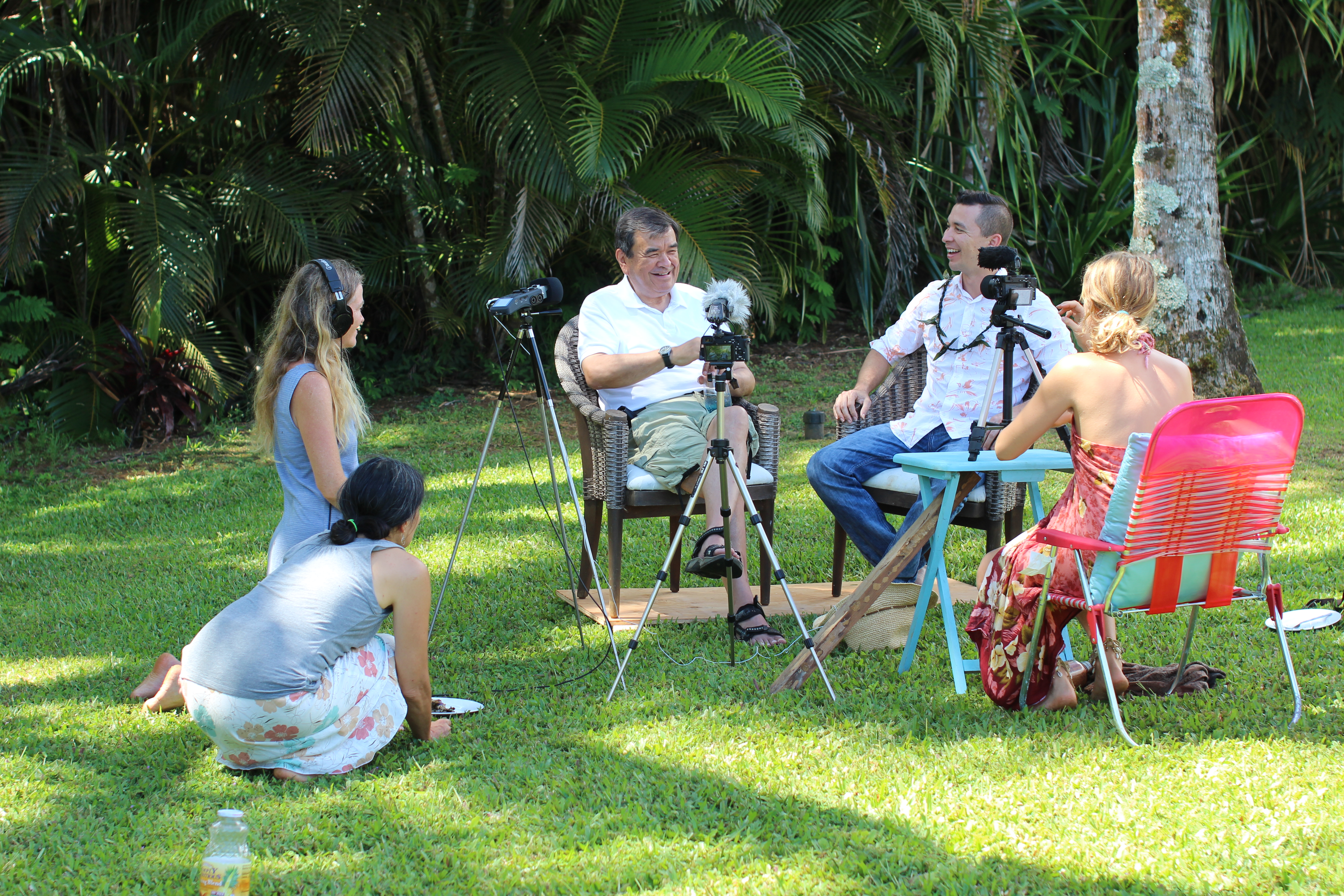
What made the experience at Wisdom Weavers so surreal was the realization that these conversations were not happening in academic halls or government buildings, but among indigenous elders, musicians, spiritual thinkers, and people who viewed the Earth itself as a living intelligence. Only weeks earlier, Hawaii residents had received a mistaken inbound ballistic missile alert on their phones, briefly believing nuclear annihilation was imminent. That collective shock had intensified ongoing discussions among many of the people gathered there—individuals who had quietly spent years attending conferences on hypersonic weapons, diplomacy, and the growing tensions between the United States and Russia.
It was within this unlikely convergence of indigenous wisdom and geopolitical awareness that I met Makana. Known for carrying Hawaiian consciousness through music, Makana was collaborating with others connected to the gathering on a mission to Russia centered around nuclear disarmament and cultural diplomacy. Long before the modern escalation surrounding Ukraine, these conversations were already happening quietly beneath the surface, carried by artists, elders, and independent thinkers who understood how fragile civilization truly is. Witnessing this intersection of ancient wisdom and modern existential threat altered something in me. It revealed that indigenous perspectives are not relics of the past, but living systems of awareness capable of speaking directly to the most dangerous crises of the modern world.
During the gathering, I was introduced to Makana's work more deeply—his music wasn't just artistic expression, it was communication rooted in responsibility. A reminder that culture itself can function as education, preservation, a warning system, and a bridge between worlds.
This is another overlooked dimension of indigenous knowledge: it is not static—it evolves through story, sound, and ceremony.
What Indigenous Wisdom Reveals About Civilization
The more time I spent listening, the clearer something became: modern civilization is highly advanced—but also highly disconnected. We have unprecedented technology, global communication systems, and scientific precision.
But we often lack long-term ecological thinking, cultural continuity, and awareness of interdependence. Indigenous wisdom doesn't reject progress. It questions imbalance. This same inquiry runs through every tradition that treats food as medicine — a recognition that the body and the land are not separate systems.
A Lesson From Hawaii's Fragility
Standing in Hawaii, I began to understand something essential about modern life: we build systems as if they are permanent. But they are not. They exist on fragile infrastructure, political tension, ecological limits, and human decision-making.
The false missile alert made that reality immediate. For a brief moment, certainty disappeared. And what remained was vulnerability.
The Core Lesson of Indigenous Wisdom
Leaving the islands, I kept returning to one idea: indigenous wisdom is not just about tradition. It is about orientation. It reminds us where we are, what we depend on, and what we risk forgetting. It doesn't claim to have all the answers. Instead, it asks better questions. That impulse — to listen before acting, to feel before thinking — is exactly what heart intelligence calls us back to.
Final Thoughts: Why Indigenous Wisdom Matters Today
As my plane left Kauai and the islands disappeared beneath the clouds, I was left with a simple realization: the most advanced knowledge systems are not always the newest ones. Sometimes, they are the oldest.
Because they have had time to observe what modern systems are still learning: that we are not separate from the world we are trying to manage. We are part of it. And that may be the most important lesson indigenous wisdom has to offer the modern world.