
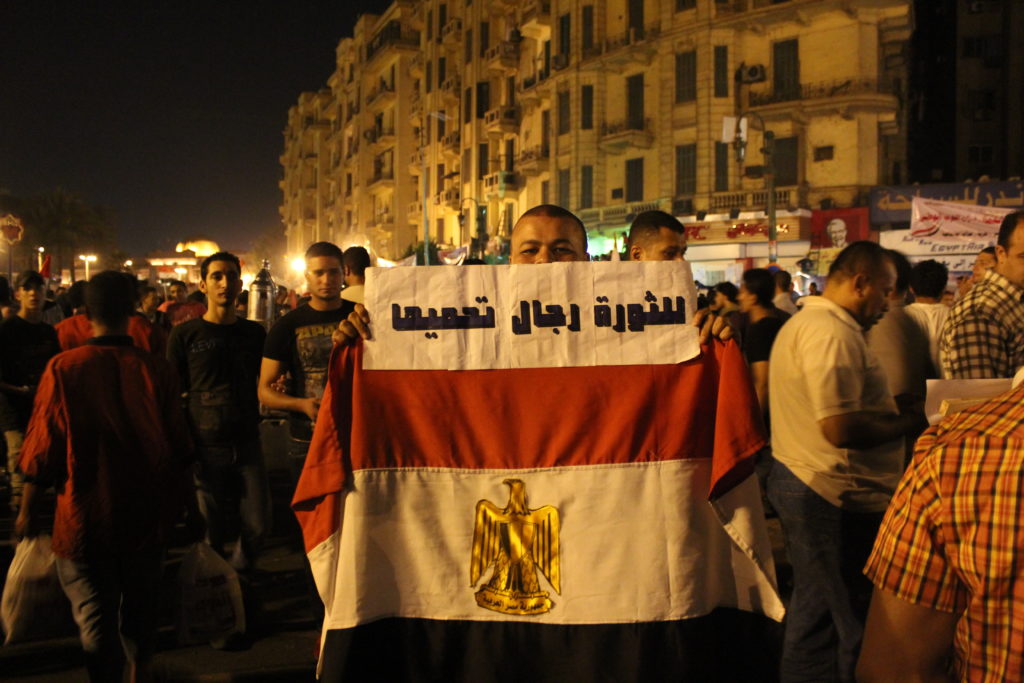
What Tahrir Square Taught Me About Islam, Fear, and the Infinite Order Hidden Inside Chaos
Before I ever stepped foot in Cairo, I carried an invisible architecture of fear inside me.
Most Americans do, whether they realize it or not.
For years, the Middle East had been presented to us through the narrow lens of terrorism, extremism, war, instability, and religion weaponized into spectacle. News channels reduced entire civilizations into headlines. Islam became less a faith than a symbol of danger projected endlessly through television screens and airport anxiety. The "Muslim world" was portrayed not as a collection of human beings, but as a permanent threat orbiting Western civilization.
And despite my curiosity, despite my travels, despite my desire to understand the world directly, some part of that conditioning still lived inside me when I boarded a plane toward Egypt during the Arab Spring.
Then I walked into Tahrir Square.
And everything I thought I knew began dissolving.
The Absence of Government and the Presence of Humanity
What shocked me first was not chaos.
It was order.
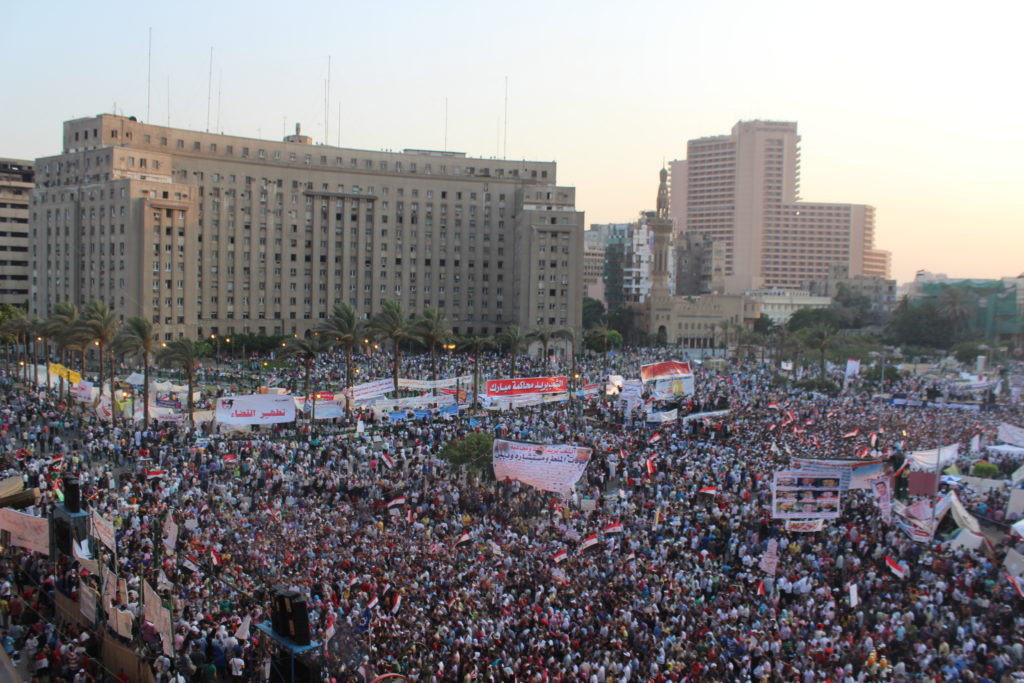
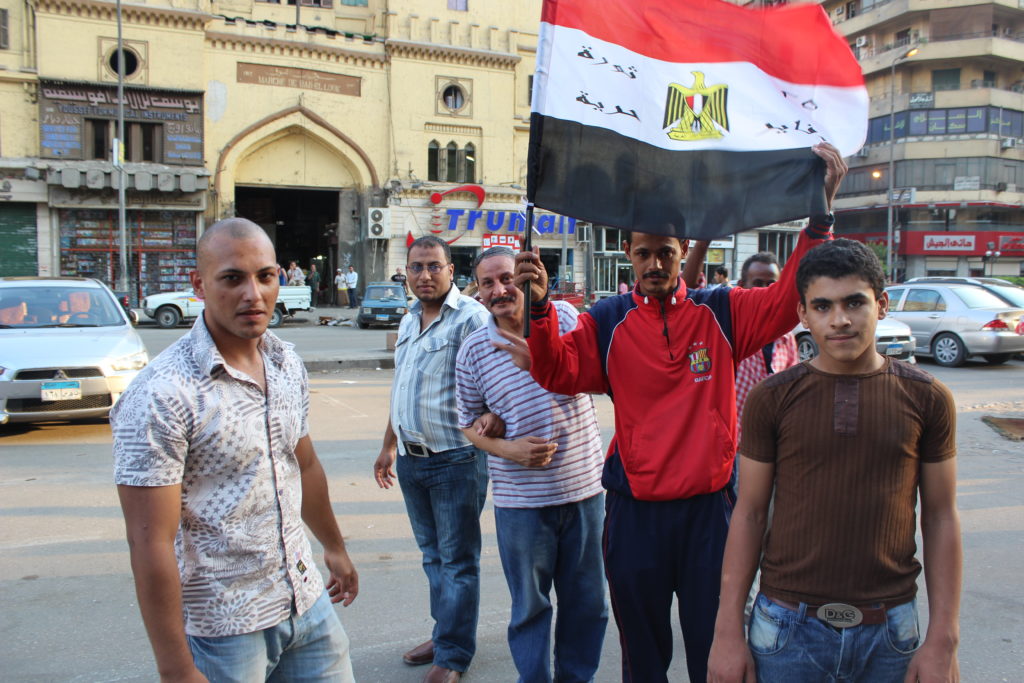
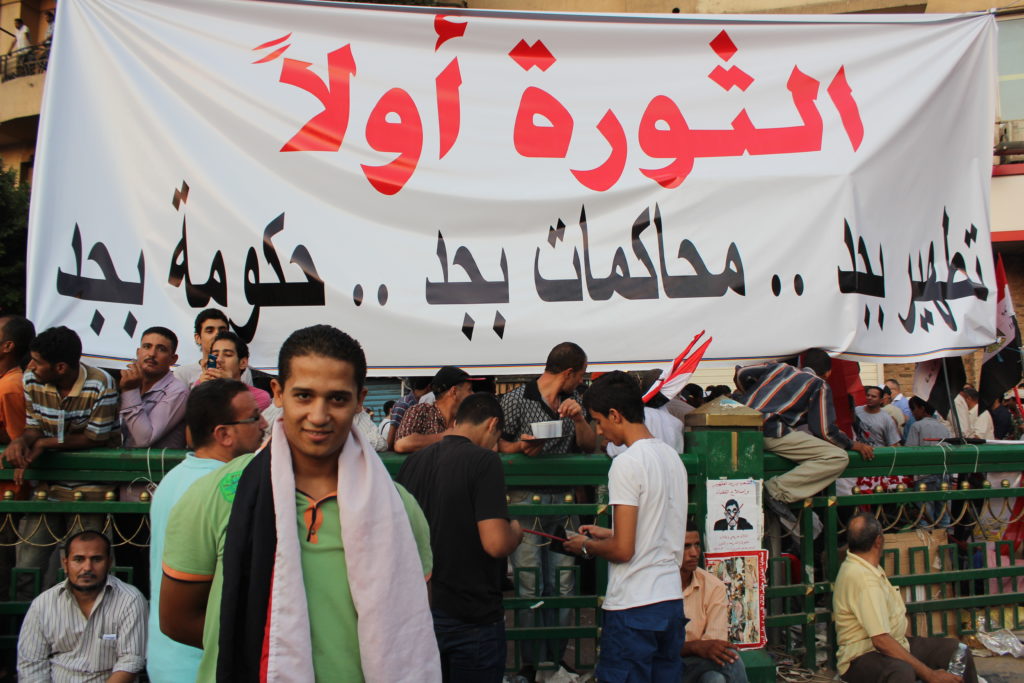
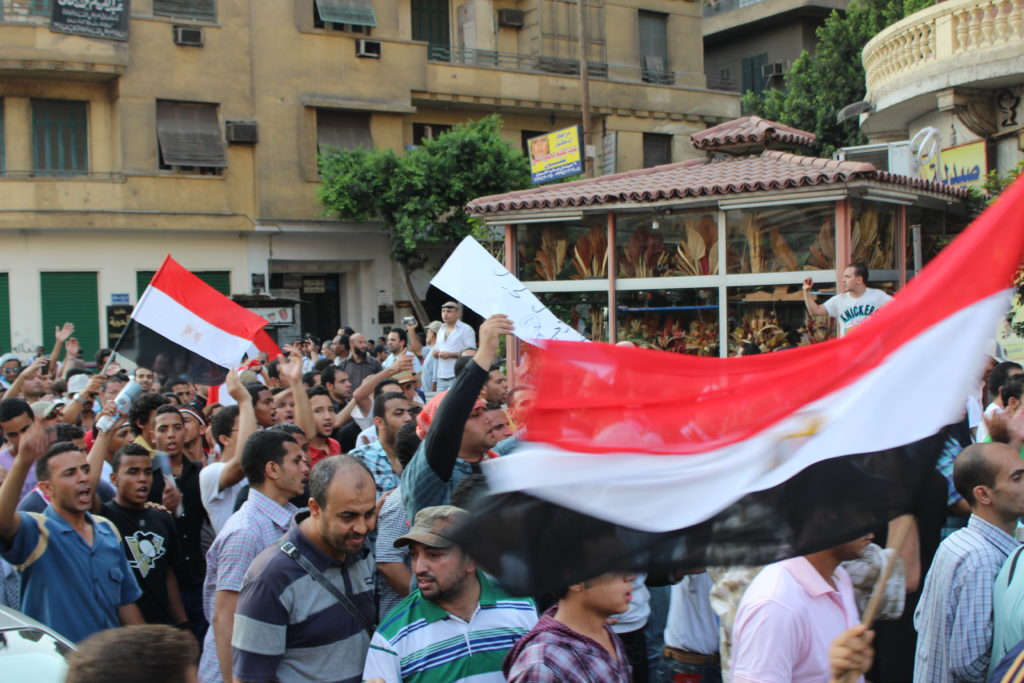
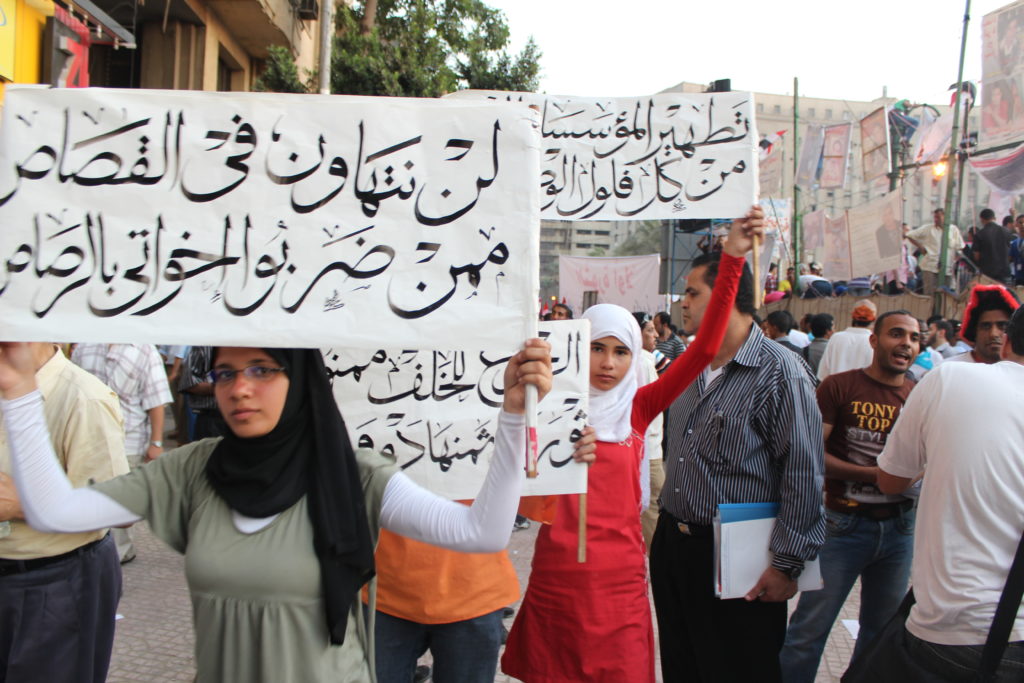
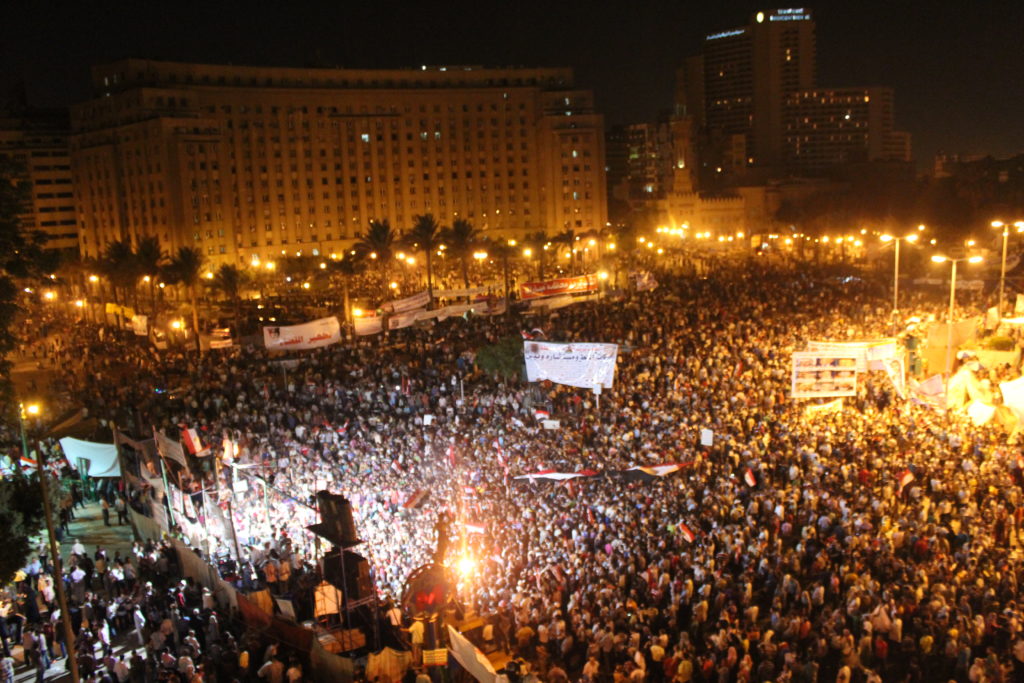
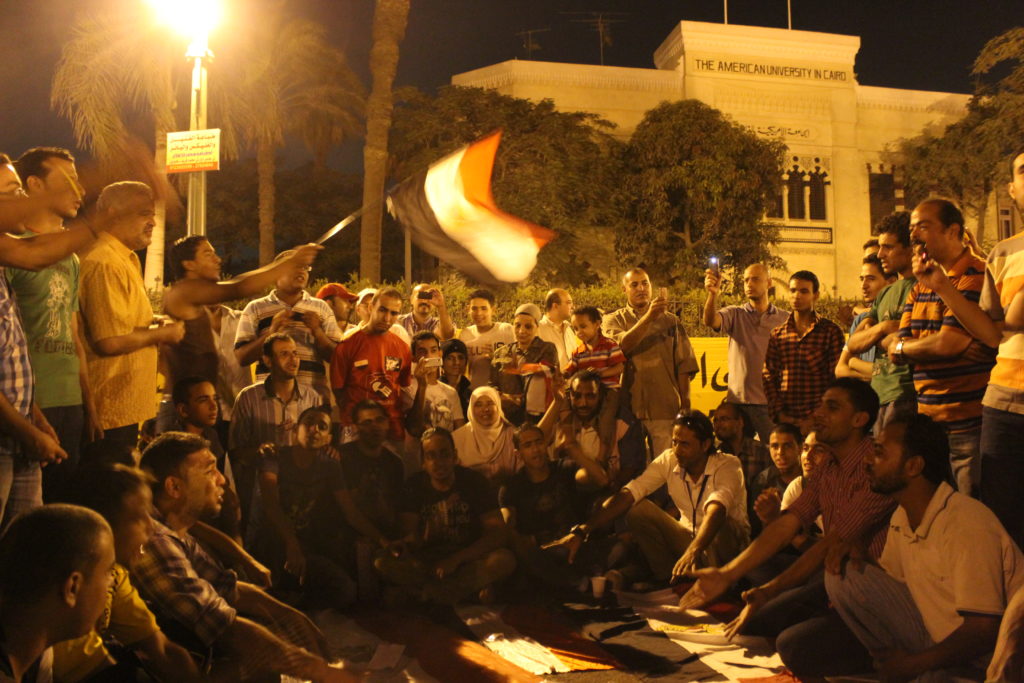
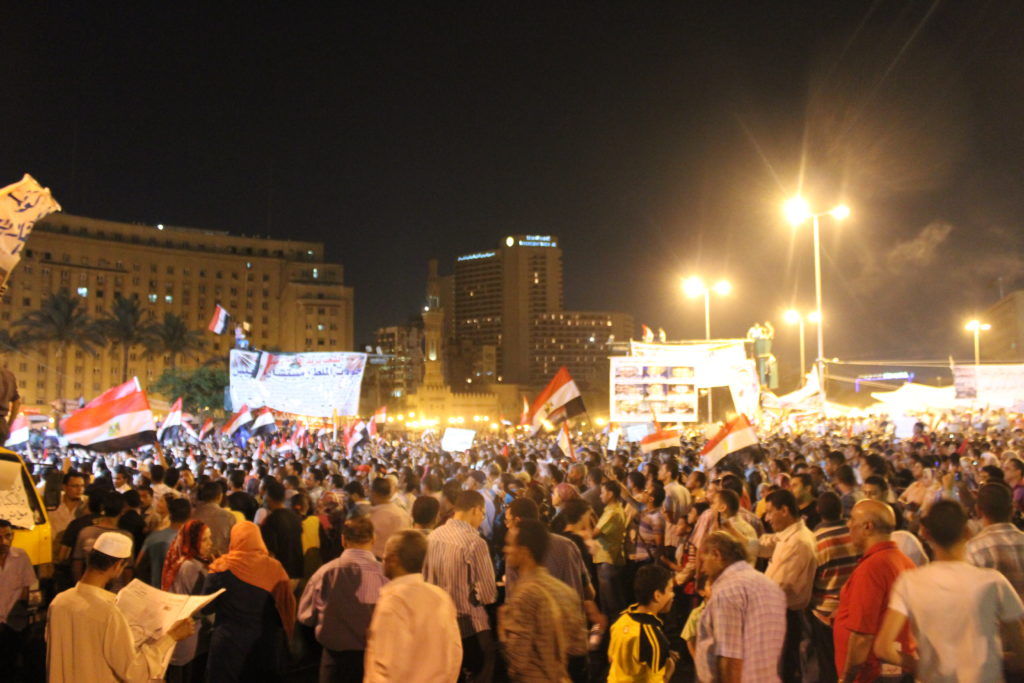
The Egyptian government had recently collapsed. One and a half million people filled Tahrir Square. Western media had conditioned me to expect violence, panic, and societal breakdown. Instead, what I found was cooperation. Families. Smiles. Music. Hope. Human beings organizing themselves naturally around a shared desire for dignity and freedom.
The deeper I moved through the square with my camera, interviewing protestors beneath the glow of flags and chants, the more I sensed something almost spiritual happening beneath the political event itself.
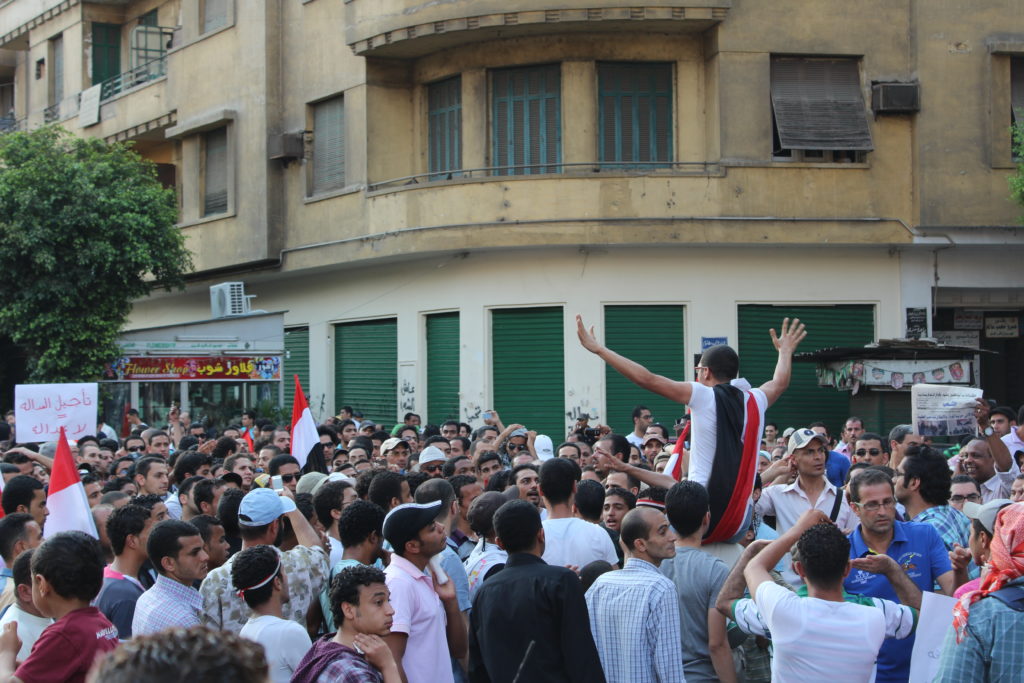
People were unified. Not perfectly. Not ideologically. But emotionally.
The artificial divisions that dominate everyday society—class, status, religion, tribe—seemed temporarily suspended beneath the shared energy of transformation. I had never witnessed anything like it. It reminded me of something I would later encounter in the youth healing work I documented years afterward—that same quality of collective presence, where the usual armor people carry simply drops.
And standing there, watching strangers help each other in the absence of centralized authority, I began realizing something profound: order does not only emerge from control. Sometimes order emerges naturally from interconnectedness itself.
That realization would stay with me long after Egypt. Because life itself seems to move this way. Civilizations rise and collapse. Governments form and dissolve. Belief systems clash and reorganize. But beneath the apparent chaos, there is often an invisible intelligence trying to reorganize life toward balance again. An infinite recurrence. A pattern hidden inside disorder. It is the same pattern I later found encoded in indigenous knowledge systems—the understanding that the world is not random, but deeply relational.
And somehow, standing in Tahrir Square interviewing Muslims during the Arab Spring, I began feeling closer to God than I ever had inside a church.
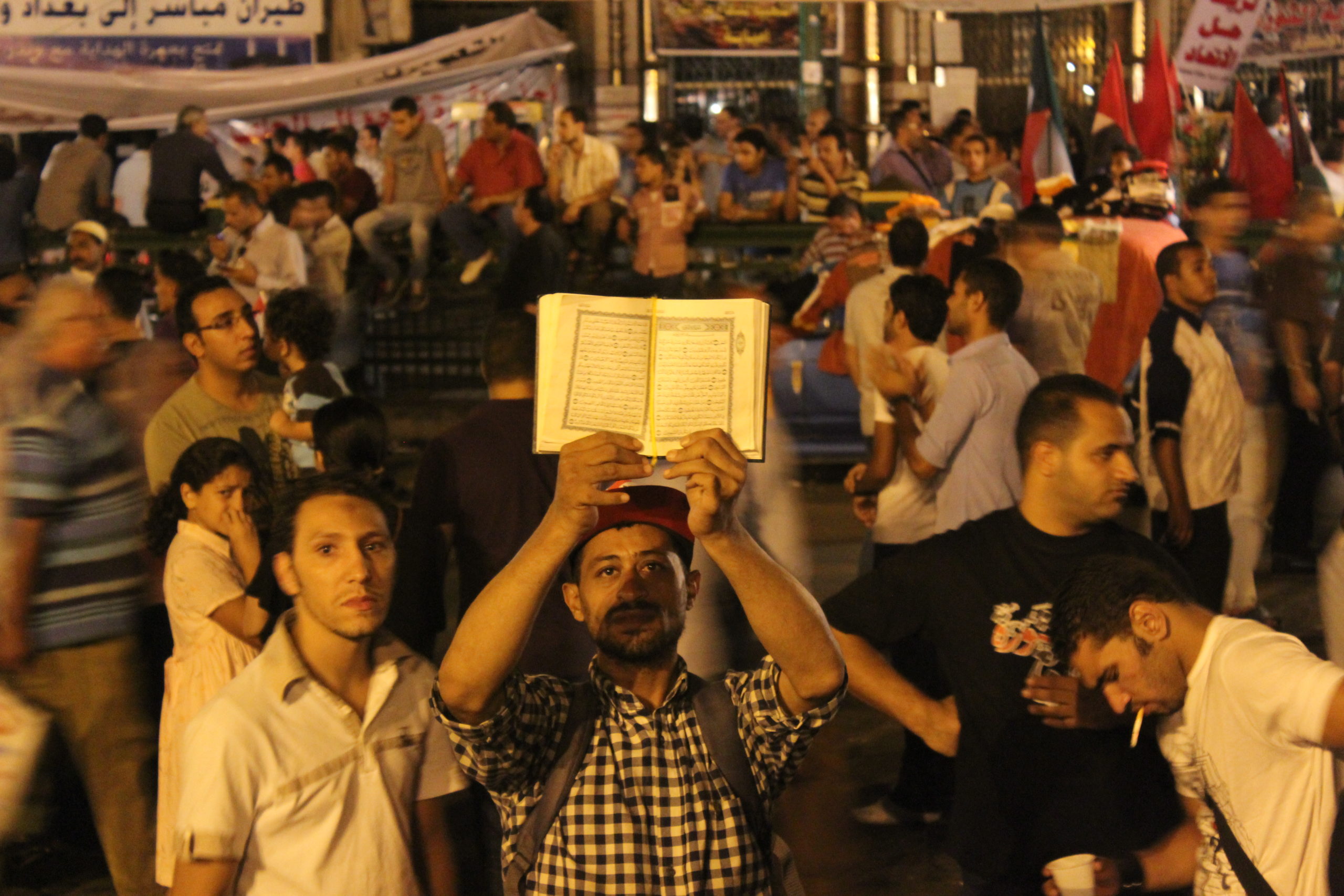
The Man Holding the Quran in the Middle of the Chaos
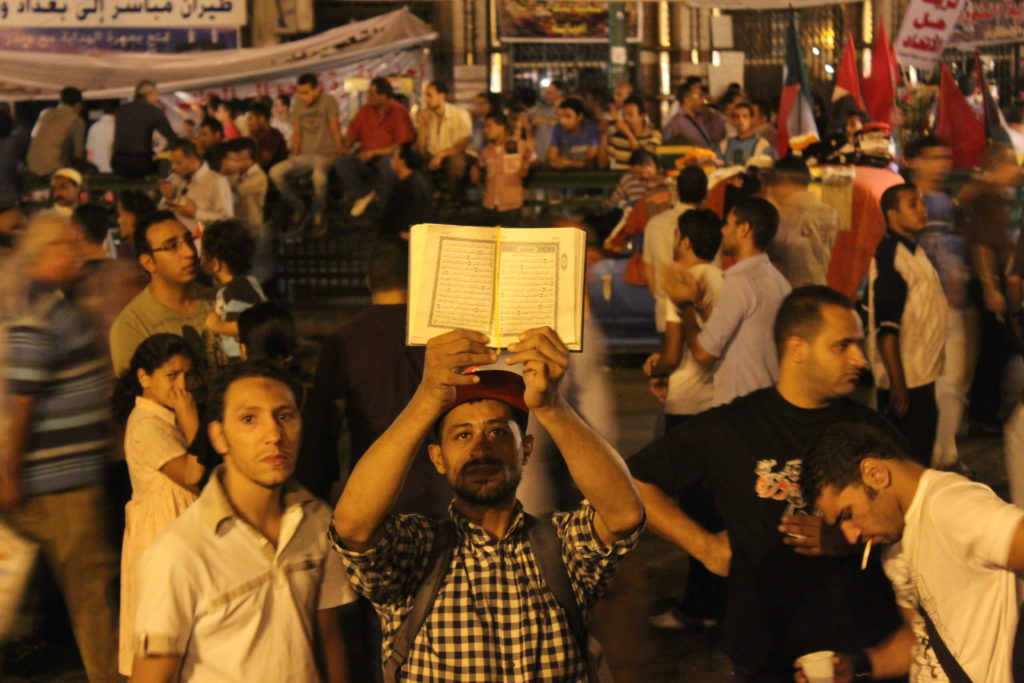
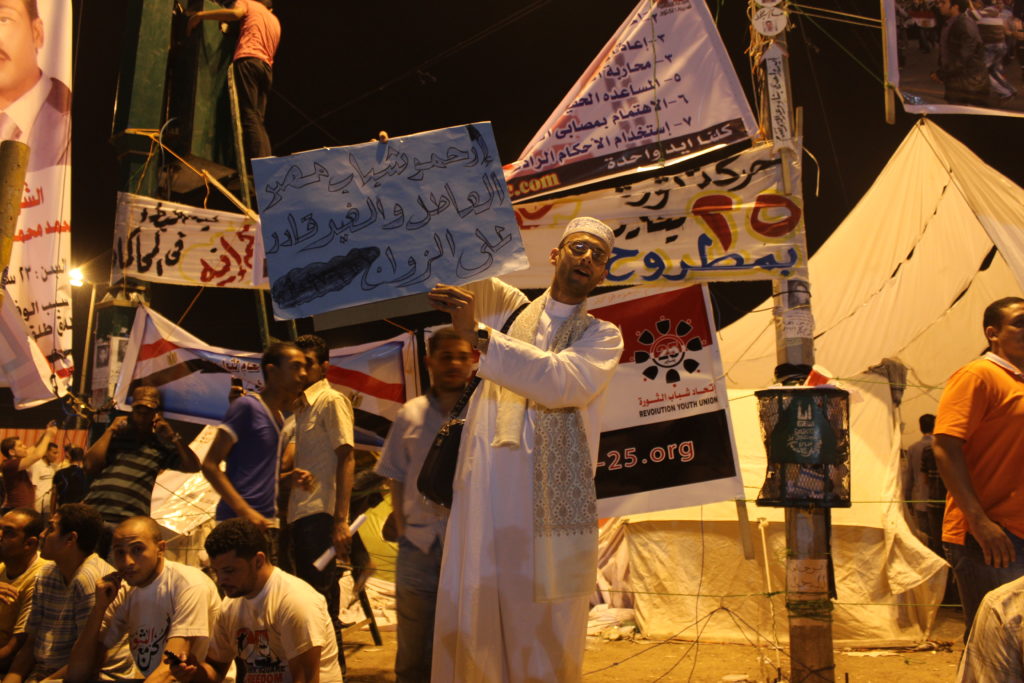
In the center of apparent chaos, a man raises the Quran calmly above his head while movement swirls around him like water around a stone.
At first glance, Western audiences are often conditioned to interpret this image through fear: Islam. Crowd. Middle East. Political unrest. Danger.
But standing there in person transformed the meaning entirely. What I saw was not fanaticism. I saw faith. I saw a human being grounding himself spiritually in the middle of uncertainty. I saw someone searching for moral orientation while society reorganized itself around him. And strangely, I related to it.
Because beneath all religion, all ideology, all politics, human beings are ultimately searching for the same thing: meaning, order, belonging, connection, and reassurance that existence itself is not random chaos. This is something the memoir returns to again and again—the question of what actually grounds a person when the external world stops making sense.
That realization shattered something inside me. Not my skepticism. Not my curiosity. But my inherited fear. The media had taught me to see Islam primarily through extremism. Yet the people I encountered in Egypt consistently reflected warmth, hospitality, humility, humor, generosity, and deep spiritual grounding.
The "threat" I had inherited psychologically from media narratives slowly revealed itself to be largely projection. And once projection dissolves, something much deeper becomes visible: our shared humanity. This same unraveling of projection—and what becomes possible when it falls away—is something I have written about in the context of wealth and identity in China as well.
Khaled Elsayed — My First Interview in Tahrir Square
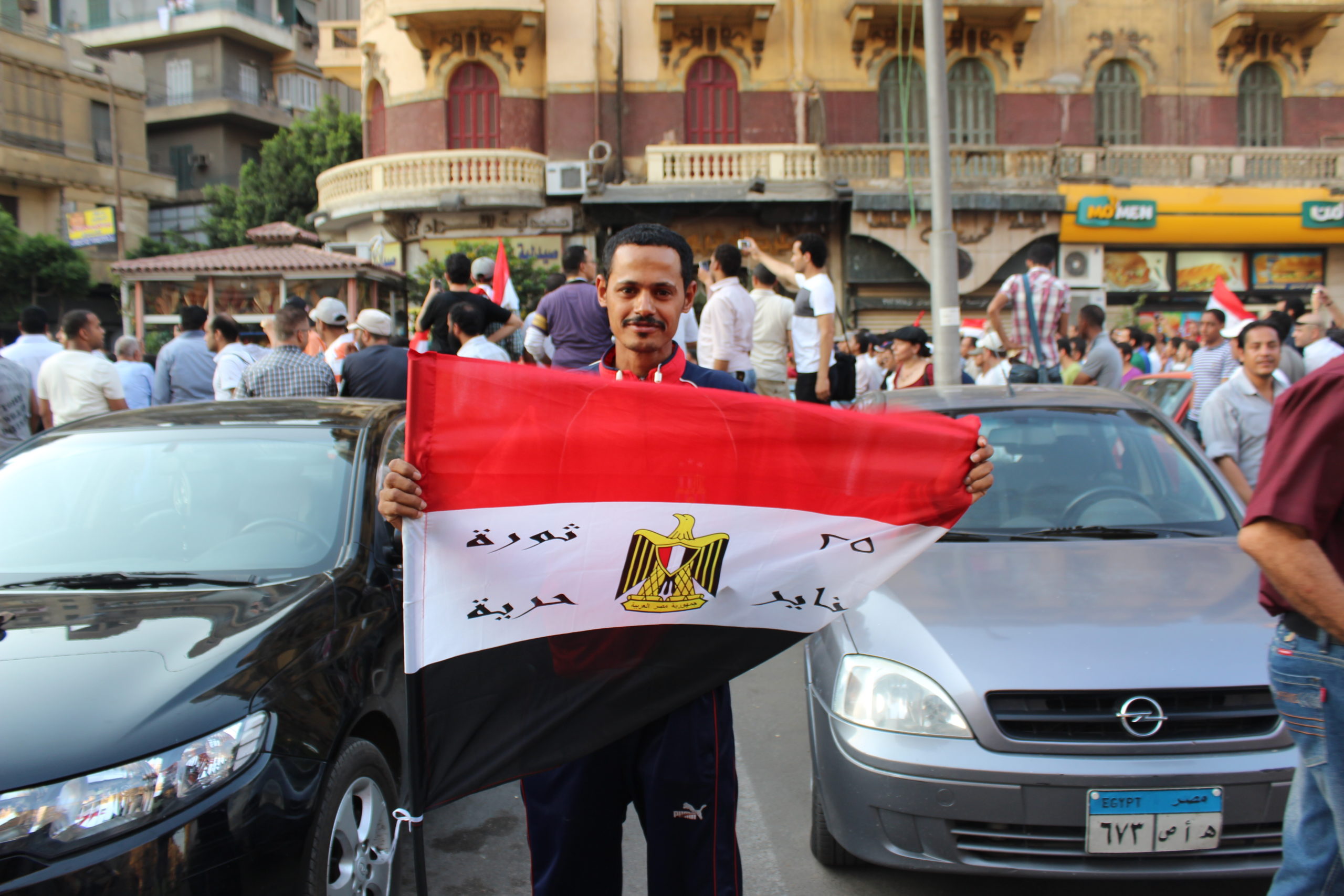
The first real interview I conducted in Tahrir Square was with Khaled Elsayed. At that point, I was still nervous. Still carrying traces of fear inherited from years of Western media conditioning. Yet Khaled spoke with calm intelligence and emotional sincerity. He was not driven by hatred. He was driven by hope.
That distinction matters. Western audiences are often taught to interpret Middle Eastern uprisings primarily through instability and extremism. But speaking directly with protestors revealed something entirely different: most people simply wanted dignity, opportunity, fairness, and a government that respected human life. The same desires people everywhere hold. You can read more about this chapter of my life in The Piano Tuner.
Khaled's interview became important to me not only because it was my first interview in Egypt, but because it marked the beginning of a psychological shift. Through direct human connection, abstract fear started collapsing. I stopped relating to "Muslims" as a category. I started relating to individuals. And individuals are much harder to fear once you actually meet them. It is the same insight at the heart of the youth healing movements I would later document—that genuine encounter is itself a form of transformation.
Amr Mamdough Mohamed and the Vision of a Government for Everyone
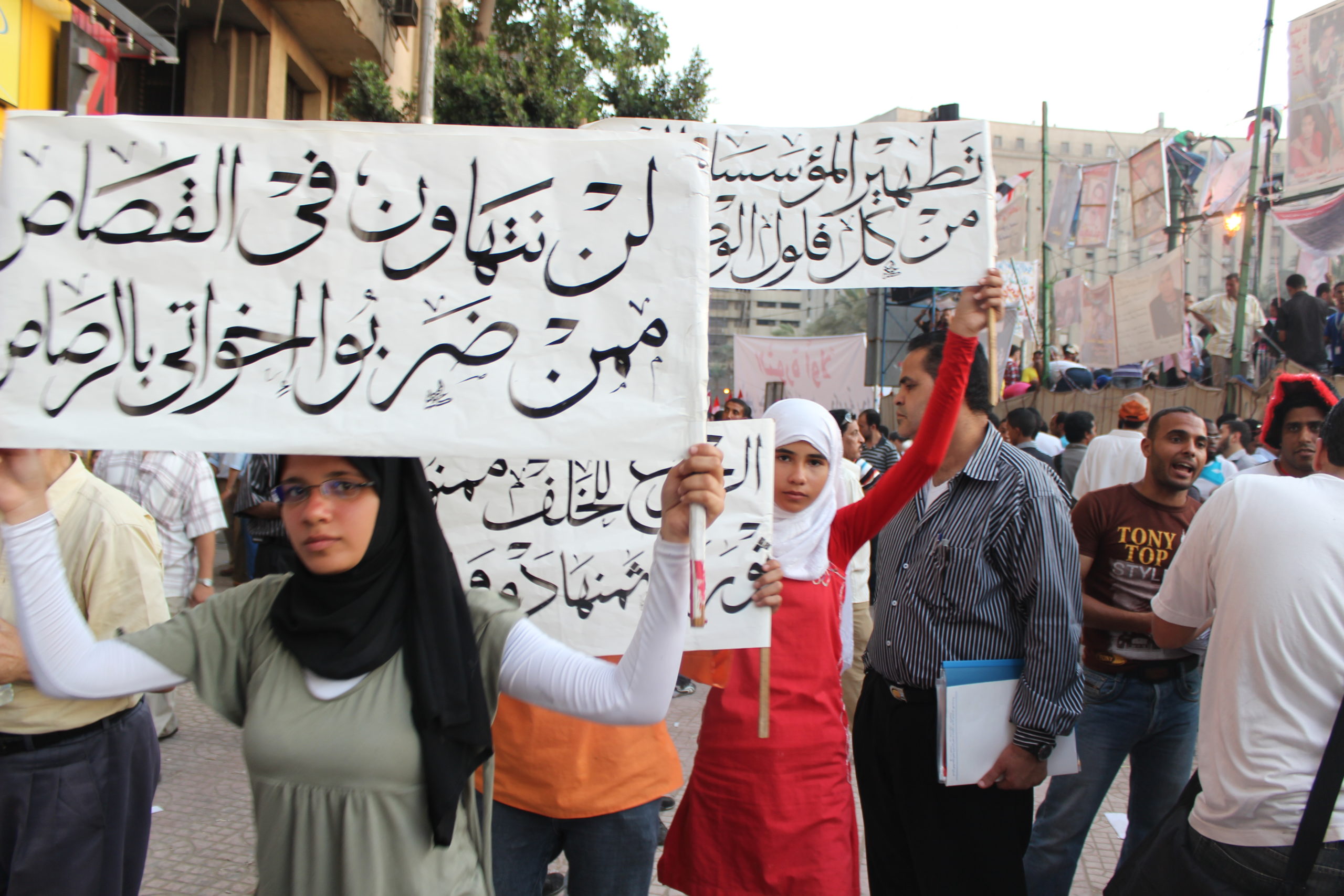
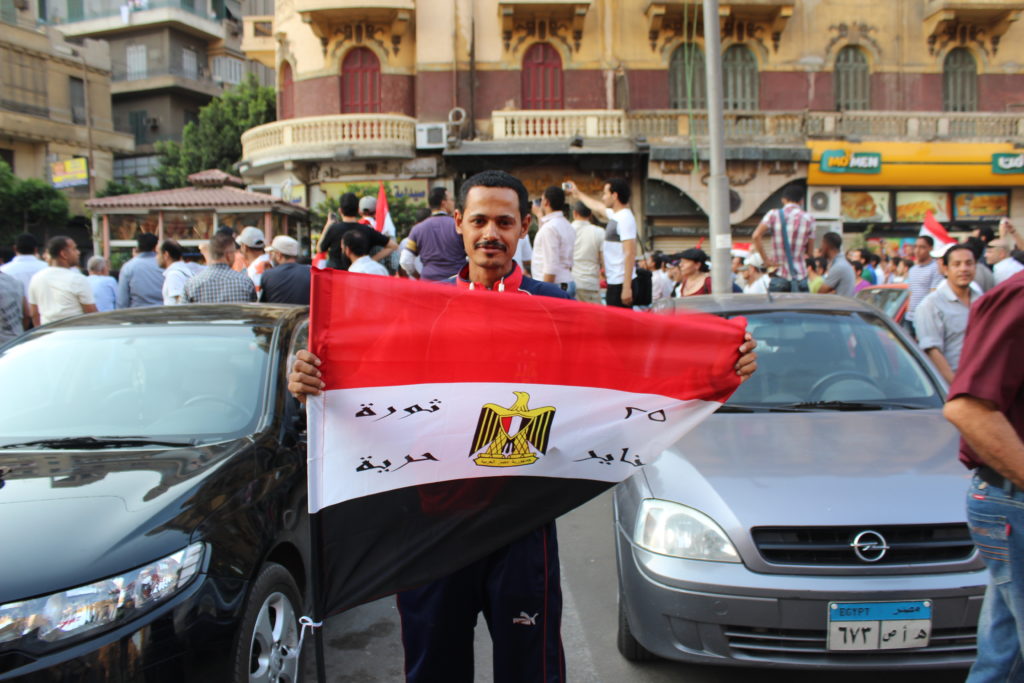
One of the most important moments I captured involved actor Amr Mamdough Mohamed and a group of young protestors speaking about their hopes for Egypt. What struck me most was how often protestors emphasized unity rather than religious dominance.
Western narratives repeatedly suggested that the Arab Spring was primarily an Islamist uprising threatening democracy itself. But on the ground, many protestors were speaking about pluralism, coexistence, and protection for all Egyptians—not just Muslims. That completely contradicted the simplified narratives I had inherited.
Standing there listening to young Egyptians describe a vision for society rooted in collective dignity rather than sectarian division, I realized how aggressively fear distorts perception. Media systems thrive on emotional simplification because fear captures attention more effectively than nuance. But real life is nuanced. Real human beings are nuanced. And once you begin seeing people directly instead of through ideological filters, the world becomes simultaneously more complicated and more beautiful. The deeper lesson emerging for me was that systems of division often depend on preventing genuine human contact. The moment people actually encounter one another honestly, fear frequently begins dissolving on its own.
Amjad Shashi and the Reality of the Muslim Brotherhood
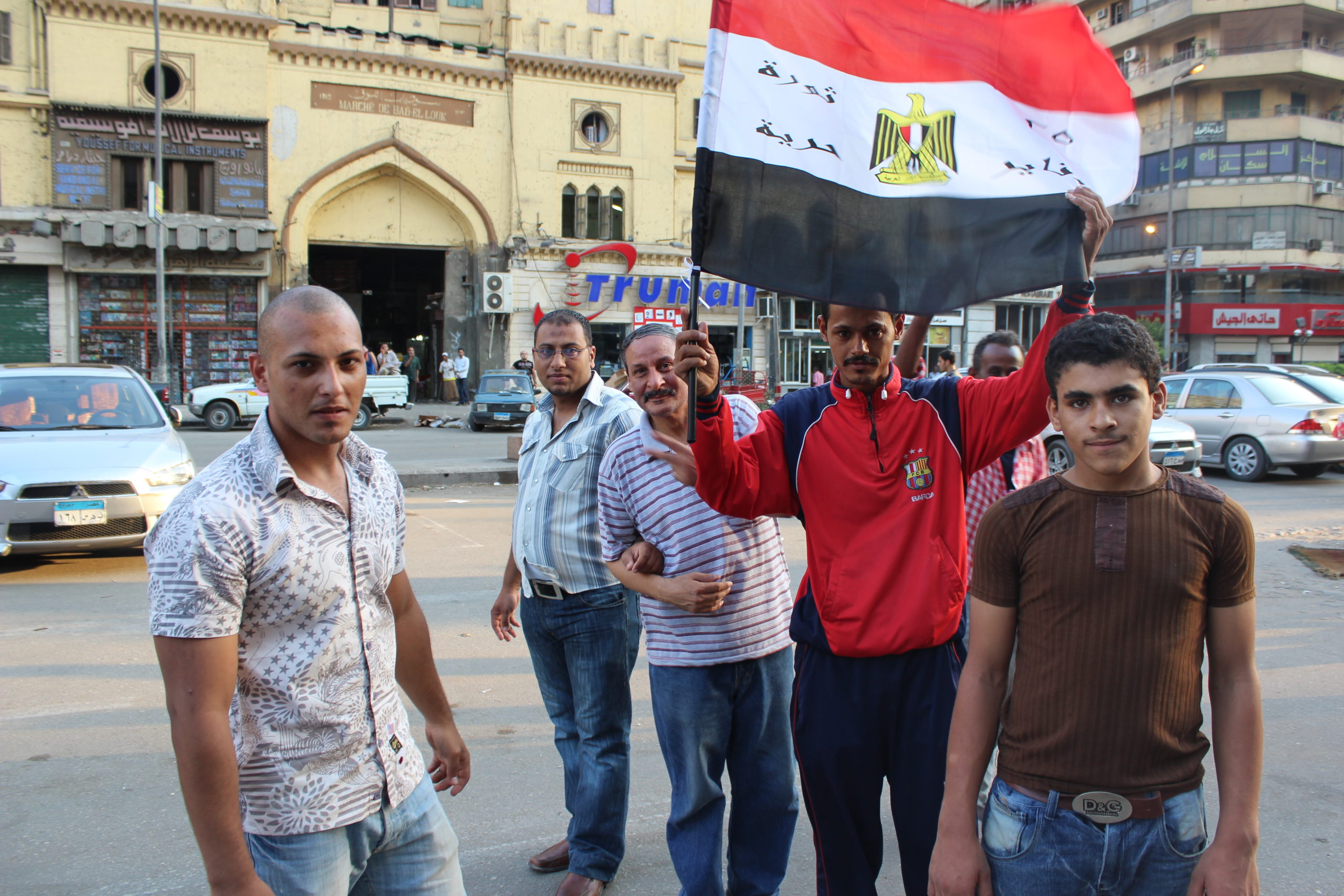
One of the most transformative interviews I conducted was with Amjad Shashi, who helped me understand the reality behind the media portrayal of the Muslim Brotherhood. Before arriving in Egypt, the Muslim Brotherhood existed in my imagination as some massive looming extremist force because that was how Western media consistently framed them.
But in Tahrir Square, reality looked very different. The actual religious conservatives I encountered represented a relatively small presence compared to the overwhelming energy of ordinary citizens simply demanding freedom and reform. Amjad helped contextualize this in a way that immediately cut through my inherited assumptions.
And that was the moment I truly understood something dangerous about fear-based media: fear magnifies fringe elements until they psychologically dominate public perception. The image becomes larger than reality itself. That mechanism exists everywhere—not only with Islam. Societies repeatedly construct symbolic enemies because fear creates social cohesion, political leverage, and endless media engagement. But direct experience interrupts projection. And interruption creates the possibility for truth. I have explored this theme of encountering reality beneath received narrative throughout my journalism—from Egypt to Kauai to the streets of Shanghai.
Finding God Through Interconnectedness
I did not leave Egypt as a Muslim. I did not suddenly adopt organized religion. But I did leave with a radically transformed understanding of spirituality.
What I encountered in Tahrir Square was not merely political revolution. It was collective human consciousness revealing itself through unity under pressure. For brief moments, people stopped functioning as isolated individuals competing inside systems and instead became part of something larger than themselves. I have seen echoes of this in indigenous gatherings in Hawaii, where elders from around the world described this same quality of collective field—a sense of intelligence that exists between people rather than inside any single one of them.
That feeling is difficult to describe unless you've experienced it directly. The closest word I have for it now is God. Not God as an old man in the sky. Not God as rigid doctrine. But God as interconnectedness itself. God as pattern. God as recurrence. God as the invisible intelligence moving human beings toward one another despite endless systems trying to divide them. There is something in macrobiotic philosophy that points at this too—the idea that all health, all balance, all restoration comes from realigning with patterns larger than the self.
The Middle East taught me that order and chaos are not opposites. They are partners in an eternal cycle. Civilizations collapse. Narratives dissolve. Fear mutates. Empires rise and fall. But beneath all of it, humanity keeps reaching toward connection again and again. That is what The Piano Tuner is ultimately about—the long, strange, wandering path back toward that connection.
And sometimes, in the middle of apparent chaos, a man holding up the Quran can teach you more about unity, love, and God than a lifetime of inherited fear ever could.